Chance and unintended consequences
Far from the Madding CrowdChance and unintended consequences in Far from the Madding Crowd arise when an ordinary action meets a world that gives it a far greater meaning or effect than its maker intended. A young sheepdog, earnest but unable to judge when enough is enough, drives Gabriel Oak’s flock over a chalk-pit edge; later, Bathsheba Everdene’s casual Valentine to Boldwood turns a teasing gesture into what he reads as a serious declaration. The episodes differ in scale, but both make misjudgment consequential: outcomes emerge from the collision of habit, circumstance, and interpretation, not from a plan proportionate to what follows.
Overzealous Work and Catastrophic Loss
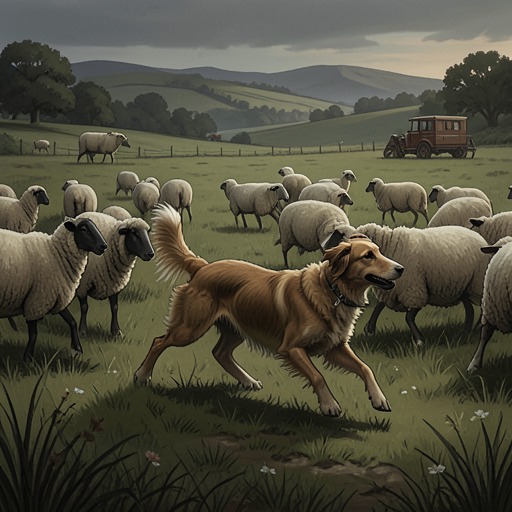
The sheepdog’s disaster begins in a small failing of judgment. George, the older and experienced dog, understands the difference between useful work and excessive pursuit. His unnamed son is still learning the flock, and has not mastered that distinction: when sent behind the sheep, he drives them with such thoroughness that he would chase them across the county unless checked. His competence is real, but untempered by restraint.
One night, Gabriel leaves the dogs on Norcombe Hill after they have eaten a dead lamb. Before dawn, the unusual sound of the sheep’s bell tells him that the flock is running. Two hundred ewes have disappeared. Following their tracks, he finds that they broke through a hedge and passed toward the chalk-pit, where the young dog is waiting at the summit. The sheep’s footprints continue through a break in the railing. Below lie the flock’s dead and dying animals, including ewes carrying unborn lambs. The young dog has gathered them, driven them across the field, and worried them with enough force to break the decayed barrier.
For Gabriel, the loss has both humane and financial consequences. His first response is pity for the sheep and their unborn lambs; only afterward does he reckon that the flock was uninsured and that his savings and prospects as an independent farmer have been swept away. His remark of gratitude that he is not married measures the poverty he expects to face. The same action that exposes the dog’s misguided diligence also overturns the shepherd’s hard-won progress.
The dog’s fate completes the episode’s bitter irony. Taken at noon and shot, he is judged too good a workman to live: his error is to apply a sound instruction without the moderation that the situation requires. The episode makes chance operate through character and circumstance together. The dog does not intend destruction, but his unqualified pursuit, the flock’s movement, and the weakness of the railing combine to make his earnestness ruinous.
A Rescue and an Unexpected Meeting
Gabriel’s later arrival at Weatherbury shows chance turning hardship toward a new possibility. Having lost his flock and been reduced to the clothes he stands in, he learns only indirectly that Bathsheba has gone to Weatherbury; he cannot discover whether she is visiting or has settled there. On the journey, he overhears wagon passengers discussing a rich woman farmer and suspects that they may mean Bathsheba, but cannot be sure.
Near Weatherbury, Gabriel sees a fire and approaches it. A straw rick is burning, and the flames threaten the farm’s connected wheat stacks. The people gathered there are confused about how to respond. Gabriel recognizes the danger of the fire reaching the wheat and directs the effort: a rick-cloth is hung to stop the draught beneath the stack, kept wet with buckets of water, and used to turn the flames upward. He then climbs onto the rick and works from above. His practical intervention helps save the wheat and the adjoining barn.
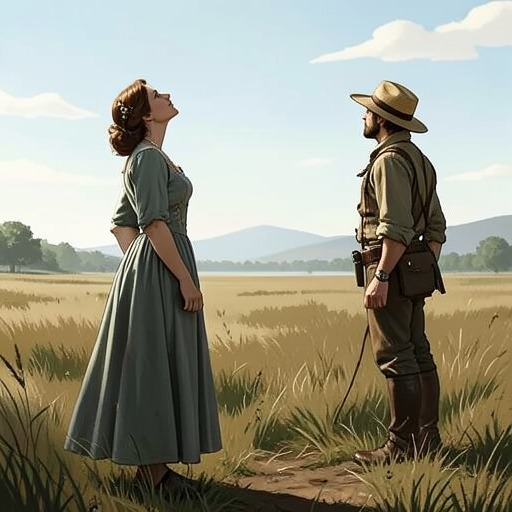
The rescue creates an opening neither Gabriel nor Bathsheba has arranged. Bathsheba, watching from horseback behind a wool veil, asks for the stranger’s name and sends word that the farmer wishes to thank him. Gabriel asks whether the farmer needs a shepherd, only to learn that the employer is a woman. When Bathsheba lifts her veil, he discovers that the woman farmer is the same Bathsheba who had rejected his suit. The accidental meeting does not erase the loss that brought him there; it gives that loss a new consequence, as Gabriel’s urgent need for work meets Bathsheba’s need for a shepherd.
The Valentine’s Joke and Boldwood’s Interpretation
The Valentine episode turns on a different kind of chance: not a physical mishap, but an unintended reading. Bathsheba has bought an ornate card in Casterbridge and initially says it is for Teddy Coggan. When Liddy suggests sending it to Boldwood, Bathsheba considers the idea partly because his failure to notice her has become faintly vexing. She and Liddy decide the recipient by tossing a hymn-book. It falls shut, the outcome assigned to Boldwood, and Bathsheba writes his name on the envelope.
The choice is casual, and Bathsheba does not share the emotional seriousness that Boldwood will attach to it. She selects a red seal with a motto she cannot read, then discovers that it says “MARRY ME.” That evening, the letter is sent; the following morning it is returned to Weatherbury. The words originate in a playful act and a random decision, but their apparent directness makes them easy to mistake for intention.
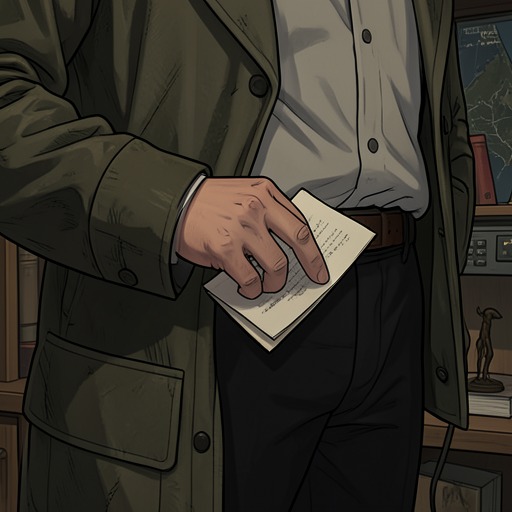
Boldwood sees the letter on his mantelpiece and repeatedly fixes his gaze on its red seal. Unable to make out the writing clearly, he reads the words in his imagination. In the grave quiet of his parlour, “MARRY ME” acquires a solemnity absent from Bathsheba’s purpose. He assumes the letter must have a serious motive and does not consider that its sender might have acted thoughtlessly. At night he places it beside his looking-glass and remains conscious of it even when he turns away.
The resulting change is not caused by the card alone: Boldwood’s interpretation supplies the intention that Bathsheba did not put into it. The novel thus distinguishes the origin of an act from the course it starts. Bathsheba’s joke becomes, for Boldwood, evidence of a possible marriage, and the contrast between her indifference and his developing ideal passion shows how easily an unintended signal can acquire force in the mind of its recipient.
Pattern and Significance
Across these episodes, chance is neither pure randomness nor a convenient escape from responsibility. The young dog’s disaster grows from a recognizable limitation in his training; Bathsheba’s letter becomes consequential because she chooses to amuse herself without attending to Boldwood’s likely response. Yet neither actor aims at the result that follows. In both cases, a small gap between intention and judgment allows an event to turn: the dog does too much, while Bathsheba does not take the message seriously enough.
The outcomes also differ in how they redistribute fortune. Gabriel’s flock is destroyed, his savings disappear, and he must seek employment; the fire rescue then brings him back into Bathsheba’s world as a possible shepherd. Boldwood, meanwhile, takes a trifling card as the beginning of an emotional prospect. By placing material loss beside romantic misinterpretation, the novel presents unintended consequences as a force that can impoverish, redirect, or unsettle a life. Its recurring irony is that consequences often begin not with grand decisions, but with a dog doing its work too well or a woman sending a letter without considering what its words will mean to someone else.